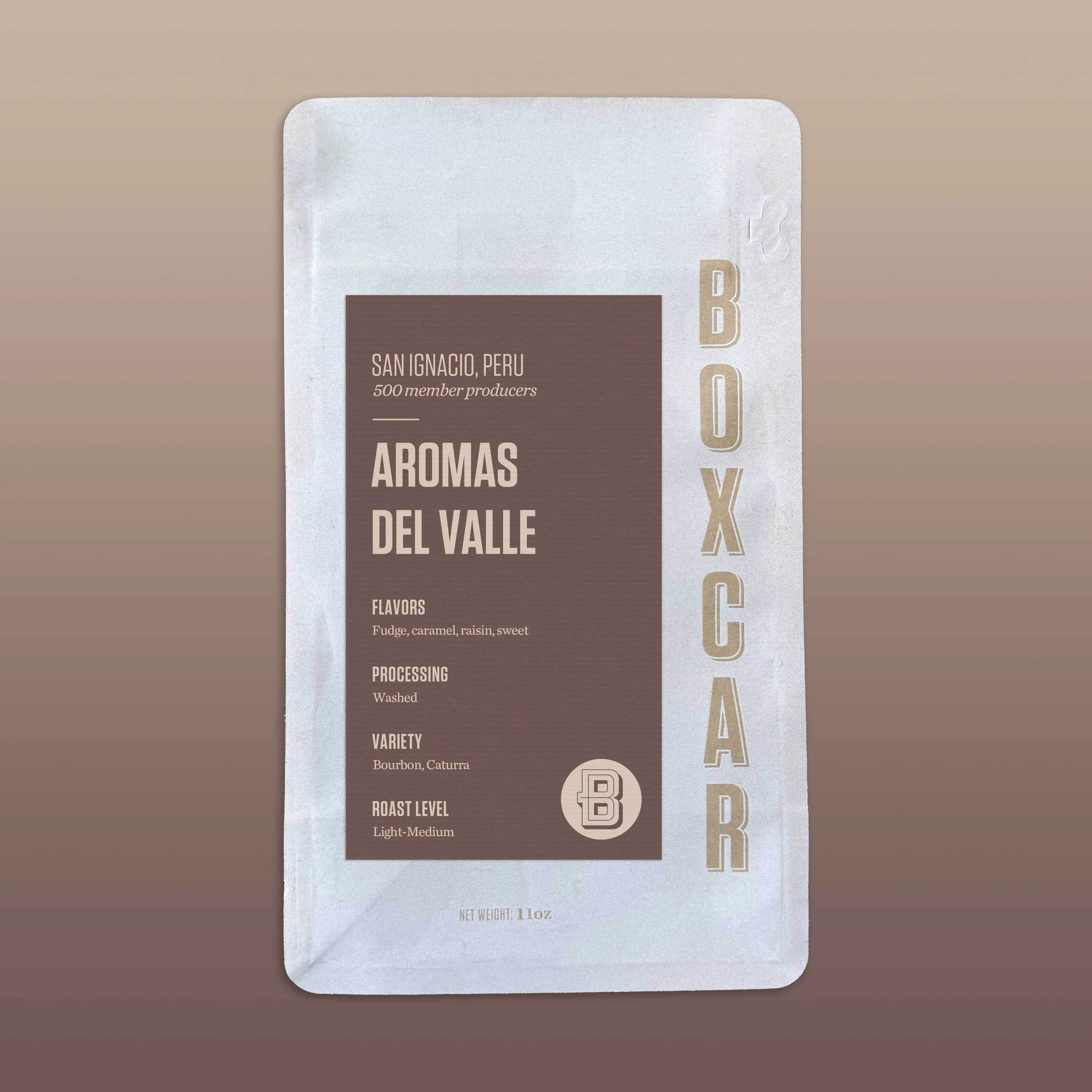
Producer: 500 member producers
Region: San Ignacio, Peru
Elevation: 1790-1850m
Variety: Bourbon, Caturra
Process: Washed
Production:
Aromas del Valle is a young cooperative with leadership and membership largely in their 30s, bringing both energy and new perspectives. Under the guidance of General Manager Iván, the team has coordinated with Yasmin of the Progreso Foundation to deliver an integrated model of farmer support. This begins with seedlings—not just coffee, but native shade and fruit trees—and extends to organic farm inputs and processing materials such as resurfaced fermentation tanks. Progreso’s work with Aromas pairs management training, access to capital, and technical assistance to increase both yields and cup quality. Importantly, Yasmin also provides market-facing support, connecting the cooperative to importers and helping members align with international buyers.
With a professional lab, a nationally recognized cupper, and a fund to reinvest in members producing high-scoring coffees through infrastructure like pulpers and solar dryers, ADV combines strong technical capacity with a commitment to cultural renewal. It is a cooperative that seeks quality not only in the cup, but in the systems of support surrounding its farmers and families.
Processing:
This is a washed coffee, meaning that after harvesting only large, ripe cherries, the fruit is separated from the seed, or de-pulped, before drying slowly and evenly on raised beds for several days depending on the weather conditions.